1300 万 vs 1 万:看完 2025 升学数据,我终于明白为什么家长急着去大马办身份
过去两年,只要家里孩子到了要“规划未来”的年纪,你一定能听到身边的家长在讨论一个地方——马来西亚。不是突然想去旅游,而是认真把它放进了孩子升学的备选路线里。
In the past two years, if your child is at the age where you need to start “planning for the future,” you’ve probably heard other parents talking about one place—Malaysia. Not as a tourist destination, but as a serious option in their children’s educational roadmap.
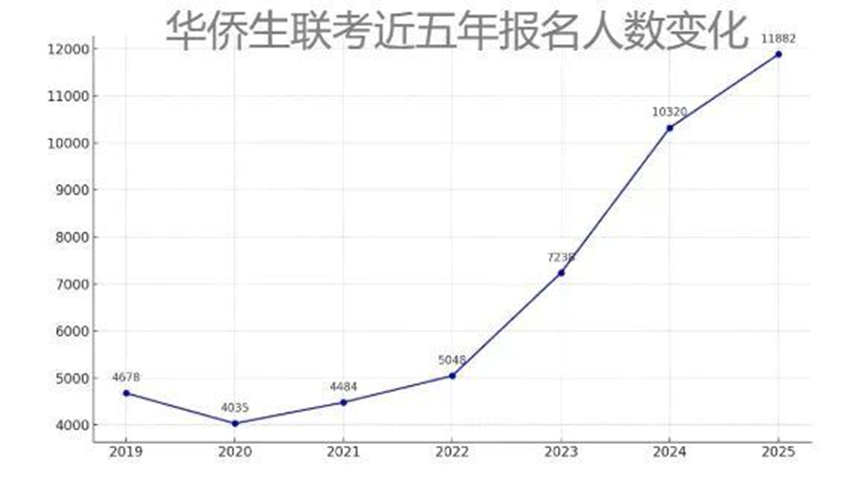
真正让家长们警觉的,是 2025 年刚公布的升学数据:一边是 1300 多万高考报名人数,把赛道挤得水泄不通;另一边,却是 一年只有约 1 万人参加的华侨生联考,录取难度和竞争压力完全不是同一个量级。两组数字一摆在一起,那种反差能让人瞬间明白:升学不是简单的努力问题,而是“选赛道”的问题。
What truly raised alarms among parents was the newly released 2025 admissions data: on one side, more than 13 million students registered for China’s National College Entrance Exam (Gaokao), crowding the track beyond capacity; on the other side, only about 10,000 students take the Chinese Overseas Student Joint Entrance Exam each year, with significantly lower admission difficulty and competition pressure. When these two sets of numbers are put side by side, the contrast immediately clarifies one truth: getting into university is not just about working hard—it's about choosing the right path.

而在所有能满足华侨生身份路径的国家里,马来西亚的性价比又高得出奇——学校多、体系成熟、语言友好,连居留政策也在持续松动。对许多家庭来说,这不是换一条路,而是给孩子提前挪出一个更宽的跑道。
Among all the countries that qualify for the Chinese overseas student status, Malaysia stands out as incredibly cost-effective—with a wide range of schools, a mature educational system, a friendly language environment, and increasingly flexible residency policies. For many families, it's not about switching to an alternative—it’s about giving their children a wider, more promising track early on.

◆ ◆ ◆ ◆
大马为何成风口
Why Malaysia Became the New Trend
◆ ◆ ◆ ◆
如果把时间线往前拉十年,马来西亚在大部分家长心中的标签还停在“旅游方便、东西好吃”这一类。但这几年它突然成了教育圈的高频词,并不是偶然现象,而是一连串现实因素叠加后的结果。
Ten years ago, Malaysia was mostly seen by Chinese parents as a place for convenient travel and good food. But in recent years, it has become a buzzword in educational circles—not by coincidence, but due to a confluence of practical reasons.
首先是成本友好。同样走国际路线,在欧美一年动辄四五十万的预算,在马来西亚往往只需要三分之一甚至更低,课程体系却几乎同款——IGCSE、A-Level、IB 应有尽有。对普通中产来说,这个差距几乎决定了孩子能不能真正走上国际赛道。
First, it’s budget-friendly. Taking the international route in Western countries often requires RMB 400,000–500,000 per year or more. In Malaysia, it usually costs only one-third of that—or even less—while offering nearly identical curricula: IGCSE, A-Level, IB, etc. For the average middle-class family, this financial gap often determines whether a child can realistically pursue an international education.
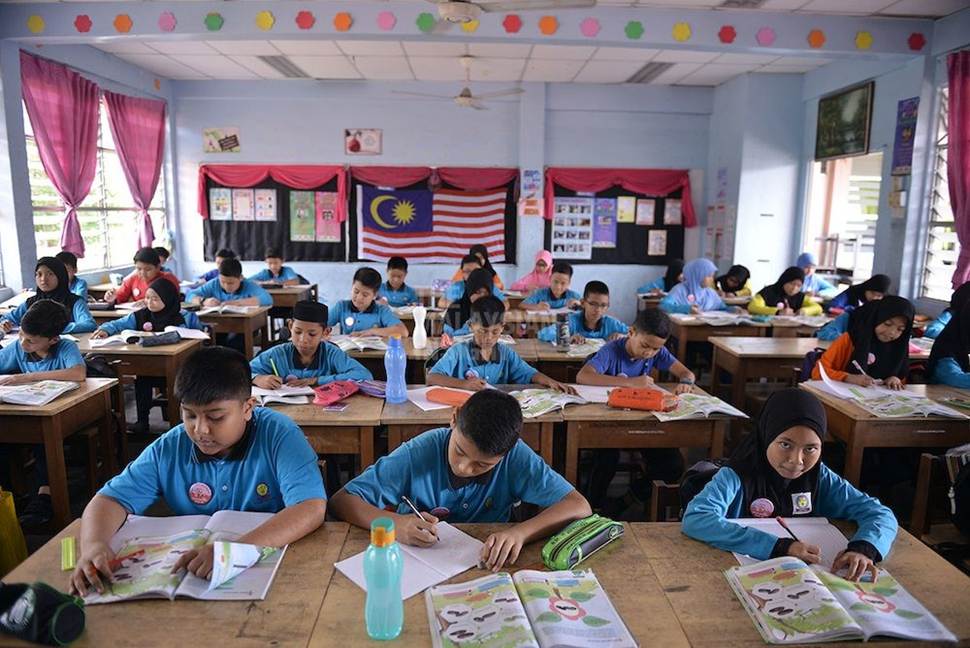
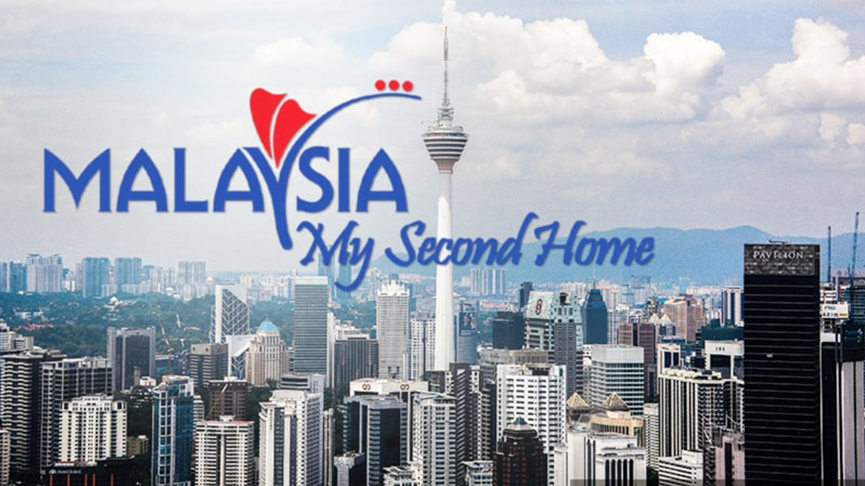
其次是体系成熟。无论你是想保留中文、希望孩子沉浸英语,还是以后想衔接欧美大学,在大马都能找到匹配的学校和路径。更关键的是,随着政策放宽,“第二家园”等长期居留方式变得可操作,愿意深度规划未来的家庭越来越多,很多家长甚至提前几年就在布局。
Second, the system is mature. Whether you want to maintain Chinese language learning, immerse your child in English, or prepare for a seamless transition to Western universities, there are matching schools and programs in Malaysia. More importantly, with relaxed policies like the Malaysia My Second Home (MM2H) program, long-term residence has become much more achievable. Increasingly, families are planning their children’s education years in advance.
当教育质量、预算可控、身份路径这三件事叠加在同一个国家时,它自然就成了风口。而家长们并不是盲目跟风,而是被一条更现实的逻辑推动:孩子的升学出口一定要提前准备,而马来西亚刚好给出了一个能落地的答案。
When education quality, affordable costs, and identity pathways converge in one country, it naturally becomes a hotspot. Parents aren’t blindly jumping on a trend—they’re responding to a real concern: the path to university needs to be prepared early, and Malaysia offers a concrete solution.
◆ ◆ ◆ ◆
家庭选择的转折点
A Turning Point in Family Decision-Making
◆ ◆ ◆ ◆
今年公布的最新数据显示,“第二家园”计划下的有效持证人数已经逼近 6 万,其中中国家庭占近一半。这不是一个小趋势,而是一个足以改变教育版图的信号。
According to the latest data, the number of valid MM2H visa holders is approaching 60,000—with nearly half from Chinese families. This is no minor trend—it’s a signal strong enough to reshape the landscape of international education planning.
十年前,中国家长对马来西亚的印象还停留在“说中文、物价不高”的层面;但现在,越来越多家庭把它视为教育规划+身份路径的入口。一项签证能同时兼顾孩子学业过渡、语言环境适应、以及未来参与华侨生联考的身份条件,大量家庭因此把“试试看”变成“必须做”。
A decade ago, Chinese parents associated Malaysia with “Chinese-speaking locals and affordable prices.” But now, an increasing number view it as a gateway to education planning plus identity acquisition. One visa can help with school transitions, language adaptation, and eligibility for the Chinese Overseas Student Joint Exam. What began as “worth a try” has now become “necessary.”

人数的猛增本身就说明了一个事实:这条路可行、稳定,且越来越成熟。在升学竞争愈演愈烈的时代,家长不会盲目扎堆,真正让他们行动的,是“如果我不提前规划,孩子未来可能少一条路”的现实压力。
The surging numbers reflect one undeniable fact: this path works, and it’s becoming more stable and well-established. In today’s high-stakes admission environment, parents aren’t just following the crowd. What pushes them to act is the fear that “if we don’t plan ahead, our children may lose an opportunity”.
当越来越多家庭迈出那一步,这个选择就不再是少数人的试验,而变成了中国家长为孩子争取更大确定性的“集体转向”。
As more families take this step, this choice is no longer an experiment for a select few—it has become a collective shift among Chinese parents toward greater security for their children’s futures.

◆ ◆ ◆ ◆
路线差距有多大
How Big Is the Gap Between Education Tracks?
◆ ◆ ◆ ◆
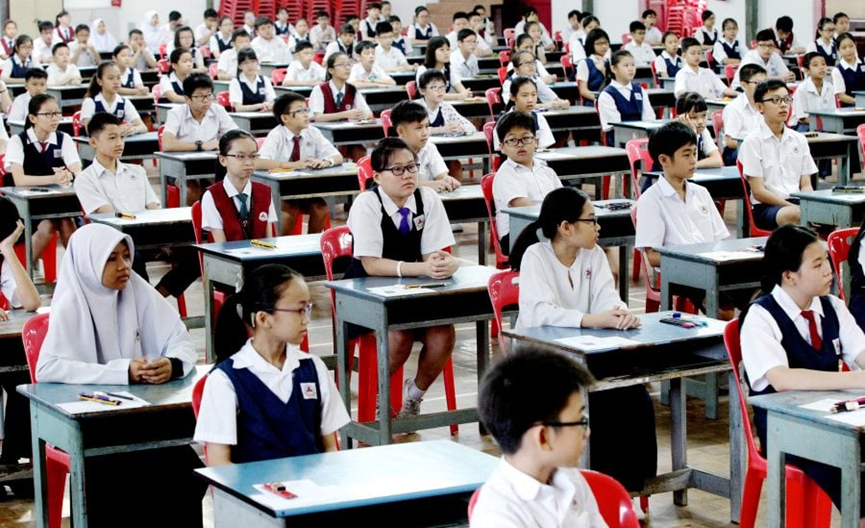
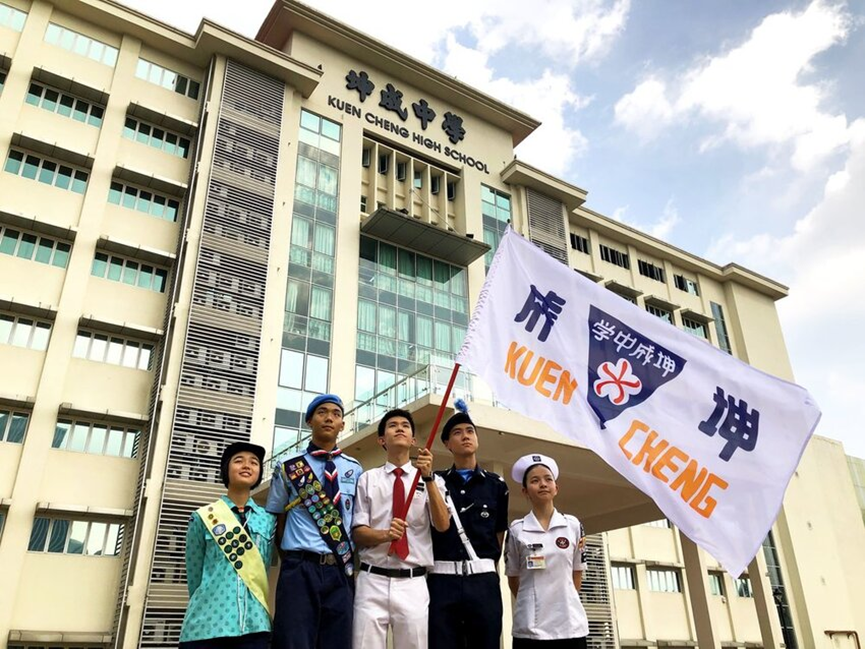
真正把孩子放进马来西亚的教育体系里,你会发现“一条路走到底”在这里并不存在。相同年龄的孩子,从中学阶段开始就已经分向三种完全不同的轨迹:公立体系、华文独中、以及国际学校。
Once your child enters Malaysia’s education system, you quickly realize there's no “one-size-fits-all” pathway. From secondary school onward, children begin diverging into three distinct academic tracks: public schools, Chinese independent high schools, and international schools.
表面上看是选择不同学校,实际上是选择孩子未来将要面对的世界。公立体系成本最低,语言以马来语为主,更适合未来打算扎根当地的家庭;华文独中课程紧凑、学习氛围浓,中文基础扎实的孩子在这里往往会走得更稳;而国际学校则像是一条明确的国际化跑道,课程体系与欧美接轨,孩子从初中开始就能提前适应英语环境,为以后申请海外大学做准备。
At first glance, it may seem like a simple school choice. But in reality, it’s a choice about which world your child will face in the future. Public schools are the most affordable, with Malay as the primary language, and are best suited for families who plan to settle locally. Chinese independent schools offer rigorous academic environments and a strong Chinese curriculum, ideal for students with a solid foundation in Mandarin. International schools provide a clearly internationalized track, aligned with Western curricula, and prepare students from middle school onward for university applications abroad.
更关键的是,这三条路线的结果差异会随着年级增长被不断放大。有人选择稳扎稳打,有人选择加速国际化,也有人从一开始就为华侨生联考做准备。
Most critically, the impact of these choices compounds over time. Some opt for steady progress, others accelerate their international exposure, and many begin preparing for the Chinese Overseas Exam from day one.
对于家长来说,这不再是“选学校”这么简单,而是一个必须提前决定的分岔口——孩子未来是走本地、走国际,还是保留回国名校的可能,方向在这一刻已经发生改变。
For parents, this isn’t just “choosing a school.” It’s a crucial fork in the road—deciding whether their child’s future lies in staying local, going global, or keeping the door open for elite universities in China.

◆ ◆ ◆ ◆
联考难度再对比
Comparing Exam Difficulty
◆ ◆ ◆ ◆
当家长真正把目光放到华侨生联考上时,最震撼人的不是政策,而是“难度差异”本身。
When parents seriously consider the Chinese Overseas Student Joint Exam, what shocks them isn’t the policy—but the stark difference in difficulty.
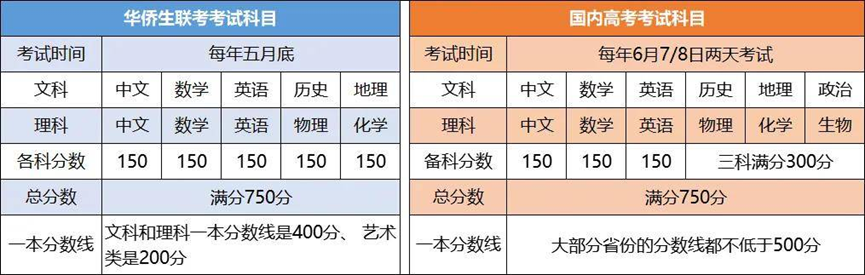
同样是为了上大学,国内孩子要在 1300 多万考生里拼位置,题目覆盖大量综合考点,备考时间几乎被压到极限;而华侨生联考的命题思路却完全不同——七成是初中内容,三成是高中基础知识,科目更少、题型更直给。
Both exams lead to university. But while domestic students battle it out among 13 million candidates in the Gaokao—facing complex, high-stress questions—the overseas Chinese student exam is based on 70% junior high content and 30% basic high school material, with fewer subjects and more straightforward formats.
更夸张的是今年的官方成绩数据显示,重点大学的录取线普遍比高考低将近 200 分。如果放到普通高考体系里,这样的差距几乎意味着“不同世界的两场考试”。
This year’s official results were even more telling: admission scores for top universities were nearly 200 points lower than those for Gaokao. In the context of Gaokao, that’s the difference between two entirely different worlds.
再加上只有 一万出头的考生规模,竞争压力自然不可同日而语。对孩子来说,这不是躺赢,但确实是更容易到达终点的赛道。对于想既保留国际教育体验、又不想放弃国内名校可能性的家庭来说,华侨生联考几乎就是一条被清晰标出的备用出口。
With only around 10,000 candidates per year, the pressure is simply not the same. It’s not a free pass—but it’s certainly a far more achievable track. For families who want to combine international education with the option of returning to China’s top universities, this exam becomes a clearly marked backup route.
◆ ◆ ◆ ◆
身份门槛可量化
A Quantifiable Identity Pathway
◆ ◆ ◆ ◆
关于华侨生联考,很多家长最担心的往往不是难度,而是:“我们家到底算不算符合条件?”其实真正的门槛并没有想象中那么高,而且——最重要的一点——它是可以提前规划、可量化执行的。
One of the biggest concerns parents have is: “Does my child actually qualify for this exam?” The good news: the eligibility criteria are not as high as most think—and more importantly, they’re quantifiable and plannable.
以马来西亚为例,最稳妥、最普遍的方式就是办理“第二家园”。一旦父母一方和孩子拿到长期居留身份,就完成了第一步。
Take Malaysia as an example. The most common and reliable approach is to apply for the Malaysia My Second Home (MM2H) program. Once one parent and the child obtain long-term residency, the first step is complete.
接下来就是累计居住时间:只要在规定年限内让孩子实际在当地生活到满足月数要求,就能达到“长期在海外居住”的判定标准。这个部分没有任何玄学,全是可操作的时间管理问题。
Next comes residency duration. As long as your child physically lives in Malaysia for the required number of months each year, they’ll meet the “long-term overseas resident” status. This part isn’t ambiguous—it’s simply about time management.
最后,孩子还需要在当地就读合规的高中课程,拿到认可学历。也就是说,政策从来不是给“挂名的身份证明”,而是真的希望学生在海外完成一段真实的学习过程。
Finally, the child must enroll in an approved high school curriculum and receive a recognized academic certificate. The policy is clear: it’s not about paperwork or “nominal residency.” The system is designed for students to complete a genuine period of study abroad.
很多家长一开始听起来觉得复杂,但当把每个步骤拆开来看:身份、居住天数、学习路径——全部都是可规划、可执行、可提前准备的。真正让人焦虑的不是难度,而是不知道什么时候开始动手。
At first, the steps may seem complex—but once broken down—residency, time, and schooling—they’re all feasible and executable. What truly causes anxiety isn’t the difficulty—it’s not knowing when to start.
◆ ◆ ◆ ◆
提前规划值不值
Is Early Planning Worth It?
◆ ◆ ◆ ◆
如果把两条升学路径放在同一张桌子上比较,家长通常会瞬间冷静下来——不是因为联考“更轻松”,而是因为差距实在太现实。
Lay both admission tracks on the table, and most parents quickly come to a sobering conclusion: not because the overseas track is “easier,” but because the difference is too real to ignore.
一边是高考这条单行道,每年固定上千万人挤在同一座独木桥上,赛道拥挤且竞争不断升级;另一边是华侨生联考,考生基数只有高考的零头,难度低、录取线友好,甚至在 2025 年出现重点院校录取线普遍下降的趋势。
On one hand, you have the Gaokao—a one-way path with over 10 million students squeezing through the same narrow gate each year. On the other, the Chinese Overseas Exam—smaller candidate pool, lower difficulty, more lenient admission scores, and even a downward trend in top university cut-off lines in 2025.
所以,当问到“值不值得提前准备”时,问题本身其实已经有答案了。规划不是为了让孩子走捷径,而是为了让孩子在未来选择更多,而不是更少。
So, when asked, “Is it worth planning early?”—the answer is obvious. Planning doesn’t mean cutting corners. It means ensuring your child has more choices, not fewer.

你越早布局,身份越稳,居住要求越容易完成,孩子越能在正常节奏中完成学习;等到升学压力真正压上来时,再想启动另一条赛道,难度和成本都会成倍增加。
The earlier you start, the more stable the residency, the easier it is to meet time requirements, and the smoother your child’s academic progression will be. If you wait until the pressure hits, starting a new pathway becomes twice as difficult and costly.
对许多家庭来说,提前选择马来西亚不是冲动,也不是盲从,而是一种降低升学不确定性的主动决策。在竞争年年升级的时代,把路铺得宽一点,就是给孩子最大的底气。
For many families, choosing Malaysia early on isn’t impulsive or blindly trendy—it’s a strategic decision to reduce uncertainty in a fiercely competitive landscape. In times of rising competition, the best thing you can give your child is a wider road to walk on.
对父母来说,“第二家园”不是为了逃离什么,而是为了预留更多转身空间。你给孩子准备的不只是一个身份,而是一种在未来能自由选择道路的底气——愿意走出去可以,想回国也完全没被堵死。
For parents, MM2H isn’t about escaping—it’s about creating room to maneuver. You’re not just giving your child a new identity. You’re giving them the confidence and flexibility to choose—to go abroad or come back—without being boxed in.
教育从来没有统一答案,唯一能确定的是:当选择变多,人生的容错率就会更高。这也是为什么,在竞争愈发激烈的当下,越来越多家庭愿意提前规划。不是因为焦虑,而是因为更稳。
There’s no one-size-fits-all answer to education. But one thing is certain: the more choices your child has, the higher their margin for error in life. That’s why, in today’s increasingly competitive environment, more families are choosing to plan ahead. Not out of panic, but for greater peace of mind.


 泰国 · 曼谷
 马来西亚 · 吉隆坡
 泰国 · 曼谷
 泰国 · 曼谷